
When Your Body Doesn’t Feel Like Home: Navigating Postpartum Body Image Struggles
Written by Dr. Colleen Reichmann, clinical director of Wildflower Therapy
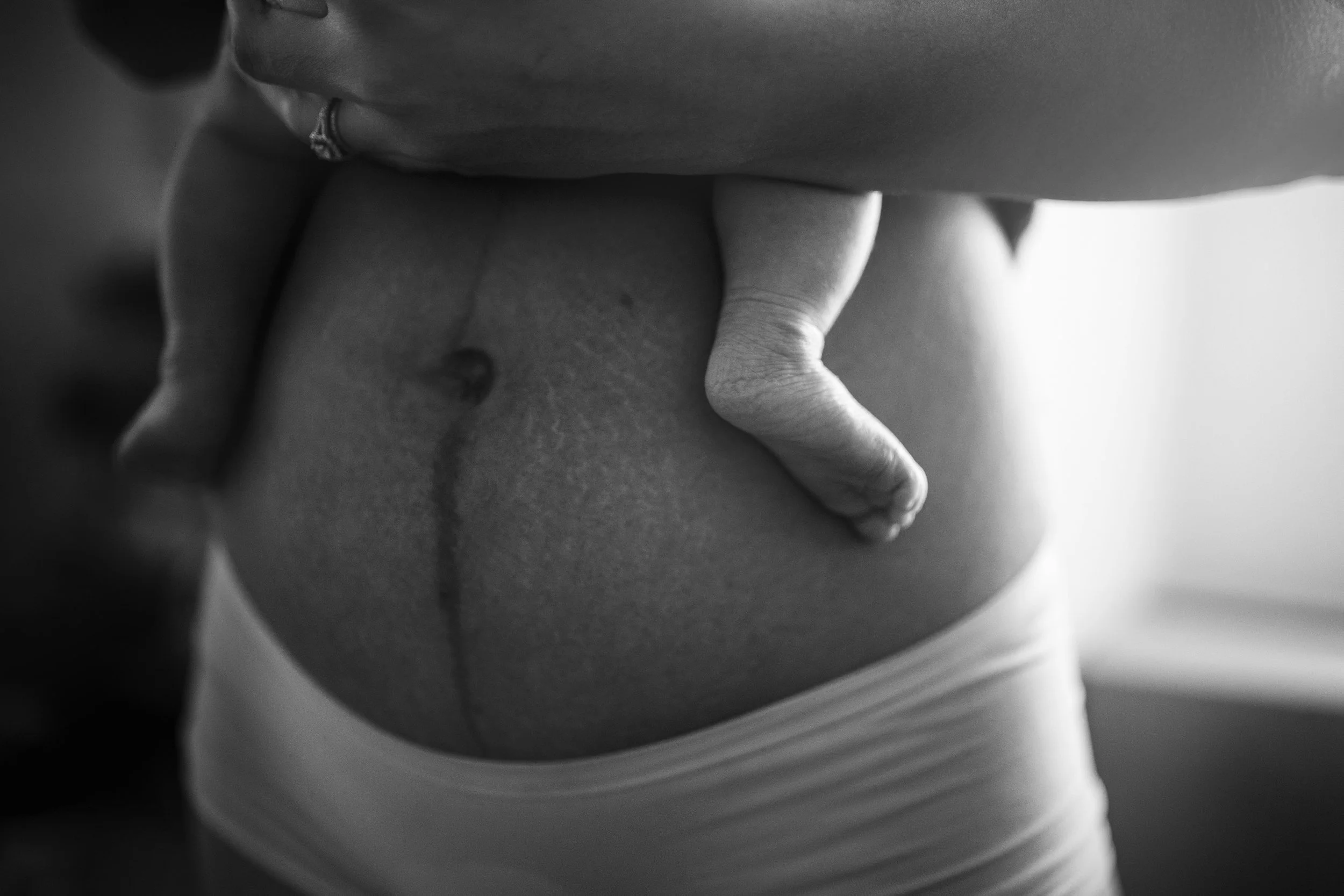
The postpartum period is often described as a time of joy, bonding, and transformation. But for many, it’s more of a layed experience, threaded with deep confusion, grief, and body disconnection. And it can last far longer than anyone talks about.
Your body changes overnight after giving birth (sometimes dramatically) and yet, life just keeps moving. The world spins on and on. Friends and relatives coo over the baby, but few people pause long enough to ask “how you are doing?” You’re expected to be grateful, glowing, and “back to normal.” But what if your body doesn’t feel like home anymore? What if you don’t even recognize it?
At Wildflower Therapy, a group practice specializing in eating disorder treatment in Pennsylvania and women’s issues therapy near Philadelphia, we hear this every day: “I love my baby, but I hate my body.” “I thought I’d feel empowered after giving birth, but instead I feel betrayed.” “Everyone told me it gets better, but I still don’t feel like myself now. I hate my body way more now than I did when I was pregnant.”
Let’s talk about this honestly. Let’s talk about what it’s like to live in a body that has been carried life (and perhaps death as well). Let’s talk about how breast/chestfeeding struggles, sleep deprivation, and identity shifts can make body image healing so much harder, especially if you’ve ever struggled with disordered eating or an eating disorder.
The Myth of “Bouncing Back”
One of the most harmful narratives about the postpartum period is the idea that you should bounce back-physically, emotionally, and professionally-within a few months of giving birth. Social media is flooded with “before and after” photos that glorify weight loss, snapping back into workouts, and productivity. But what social media doesn’t higlight is that this all often comes at the expense of rest and self-compassion.
The truth is, your body has done something monumental. It has expanded, carried, nourished, birthed, and perhaps fed another human being. You’ve experienced hormone fluctuations, blood loss, exhaustion, and emotional overwhelm. Recovery from this type of life altering series of events certainly doesn’t end six weeks after delivery.
For many, the postpartum period can feel like a long, shifting season rather than a short recovery phase. The physical and emotional reverberations can last for months or even years. And if you’ve had a difficult birth, a traumatic medical experience, or challenges with breastfeeding, your relationship with your body can feel even more complicated.
When Your Body Feels Like It Betrayed You
For some new mothers, there’s a deep sense of betrayal after birth. Perhaps your body didn’t go into labor the way you hoped. Maybe you needed interventions or an emergency C-section. Maybe you experienced pain that wasn’t believed or a loss of control that felt totally frightening.
And then, once the baby arrives, your body continues to be a site of stress: leaking milk, healing scars, hormonal shifts, nipple pain, exhaustion ( oh yes-let’s not forget the constant demands of caregiving). And for those who planned to breast/chestfeed and couldn’t-or who found it excruciating or triggering-the sense of betrayal can intensify. We often hear from those who have been through infertility, IVF, pregnancy losses, or birth trauma say that after delivery, they then pivoted to pinning hopes of their body “getting it right for once” onto breast/chestfeeding. It’s easy to see, then, why feeding struggles can feel even more monumentally difficult when this is the case. It’s incredibly common for new mothers to think, “My body failed me.” Or “Why can’t it get anything right??” Or “I can’t trust it anymore.”
When you’ve already had a complicated relationship with your body, these experiences can reawaken old wounds. Feeling disconnected from your body can easily become a gateway to disordered eating behaviors-restriction, obsessive exercise, calorie counting, or even just a constant stream of negative self-talk. Turning to these things makes sense when you think about it through the lens of someone just trying desperately to regain control and a sense of agency in a body that no longer feels predictable or trustworthy.
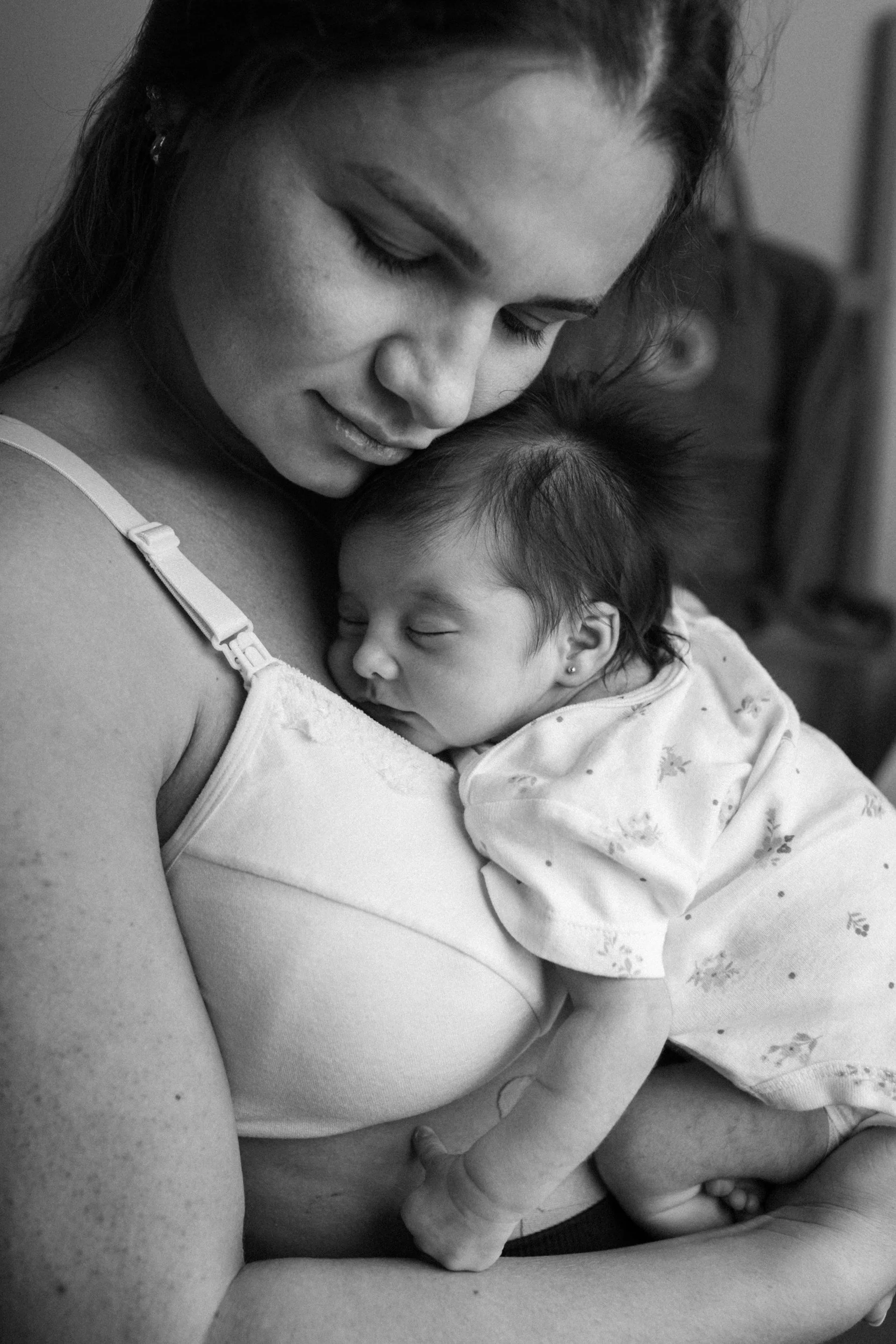
Postpartum and Eating Disorder Recovery: When Two Worlds Collide
So the long and short of it is-if you’re in recovery from an eating disorder, or if you’ve lived with disordered eating, postpartum can be a uniquely triggering time. (But you probably already knew that.) Sudden weight changes, body monitoring at medical appointments, and cultural praise for “bouncing back” can all easily stir up old obsessional thought pathways.
You may find yourself comparing your postpartum body to others, feeling guilt about your appetite, or worrying about how your changing shape is perceived. For some, postpartum hunger can feel frightening after years of controlling intake. For others, the constant eating necessary to maintain milk supply can trigger shame.
Even if you’ve done deep healing work before pregnancy, the combination of body changes, sleep deprivation, and pressure can feel destabilizing.
If you find yourself revisiting old thoughts, like, I’ll feel better if I lose weight or I can’t eat until I’ve exercised- please know that this doesn’t mean you’re failing in recovery. It means your nervous system is doing what it learned to do: trying to find control and safety in a world that suddenly feels unpredictable again.
The Long, Long Postpartum Period
Culturally, we’re told that postpartum is six weeks long. But ask any mother, and she’ll tell ya: it lasts much longer than that. Two, three, five years after giving birth, many mothers still feel different-physically, emotionally, hormonally, and mentally.
You feel disconnected from your body for a long time. You might need to process birth trauma or navigating the complex feelings that came with your journey through infertility for years to come. Or, you might find that it takes so much longer than you anticipated adjusting to your current season with your long-awaited baby, because there there is this profound loss of independence that feels jarring.
You might still be grieving the body you used to know.
And all of this can coexist with love and gratitude for your child. These feelings don’t cancel each other out, they live side by side.
At Wildflower Therapy, our postpartum therapists in Philadelphia often remind clients: you’re not broken for feeling this way. You’re human. You’re healing. You’re doing the deep work of rebuilding a relationship with your body after it’s been through something profound. It takes times, it takes intentional rebuilding, and it takes support.
When Your Body Doesn’t Feel Like Home
So many mothers quietly say: I just don’t feel like myself anymore. For some, it’s the physical sensations of stretch marks, softness, or changes in shape or sensitivity. For others, it’s emotional or existential-feeling like their identity has been scattered, their autonomy replaced by caretaking, their body now belonging to someone else. Whatever the source, that feeling of not being at home in your body can be distressing. You may look in the mirror and not recognize the person staring back. You may avoid photos, intimacy, or certain clothes because they remind you of what’s changed.
And if you have a history of disordered eating, this disconnection can be especially destabilizing. The body that once felt like an adversary may now feel like a stranger. You might find yourself wanting to “fix” it instead of listen to it.
But what if, instead of fixing, we approached this time as an invitation to re-learn trust, compassion, or even just simple neutrality with your body?
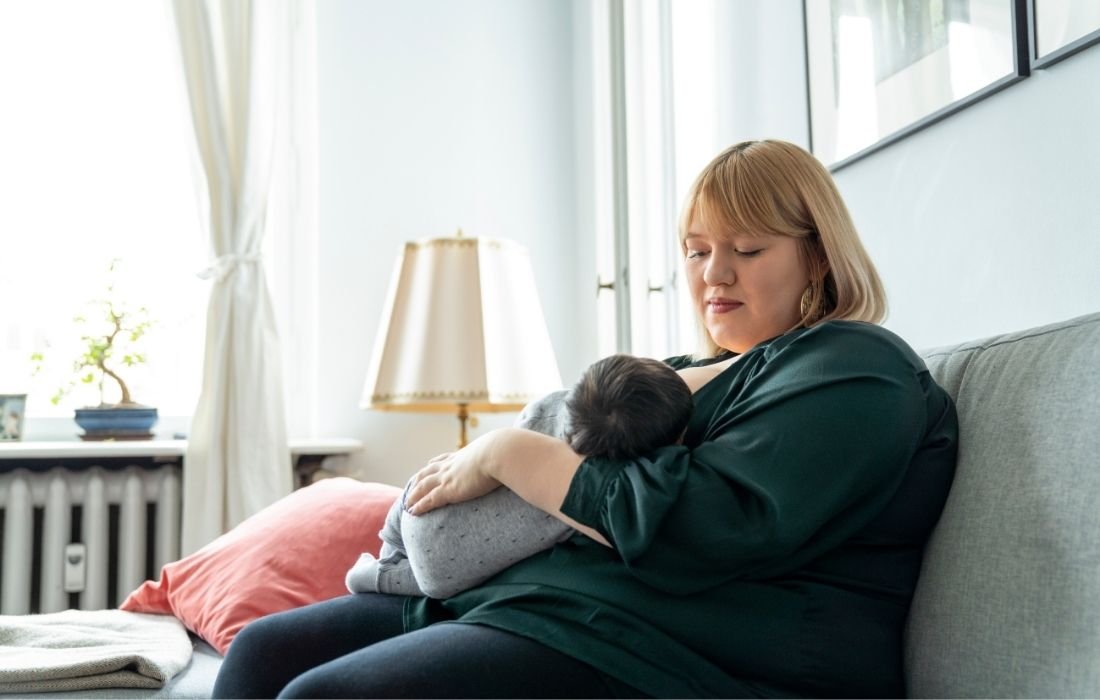
Rebuilding Body Trust, Body Kindness, or Body Neutrality After Birth
Learning to trust your body again after birth (or for the first time!) is gentle, intentional work. It’s not about liking what you see in the mirror. It’s about listening to your body and remembering that she is on your side. It’s reminding yourself, “She tried her best for me.” Often it starts out with waving the white flag and saying, “I am mourning the ways I feel let down by you, AND I don’t want to live my life at war with you anymore.”
Here are a few gentle ways to begin rebuilding that relationship:
1. Speak to your body like you would speak to a friend.
If a friend told you she was exhausted, leaking, or hurting, would you tell her to “bounce back”? Or would you tell her of course she’s exhausted, and that yes, she absolutely deserves some damn rest? Try offering yourself that same energy.
2. Notice what your body does for you, not just what it looks like.
Your body is working constantly-nourishing, repairing, soothing, holding. Let yourself marvel at that. Even when you’re tired, even when it feels broken, your body is still showing up for you.
3. Find a safe space to talk about it.
Therapy can be a powerful space to unpack postpartum body image struggles, especially if they’re tied to eating disorder history or birth trauma. Our postpartum therapists near Philadelphia specialize in helping mothers process these complex layers with warmth, compassion, and expertise.
4. Reject the bounce-back culture. Lean into the idea that this may not be your season of intense fitness or forcing your body into tight clothing that feels constricting.
You don’t owe anyone a “before” and “after.” You owe yourself compassion, and permission to rest and spend more time on the couch than you may have ever done in the past.
5. Ground in your senses.
Postpartum life can pull you out of your body and into worry, planning, caretaking. Grounding in the senses (touch, smell, sound, taste, sight) can help you come back home, slowly, safely, without judgment.
When Healing Feels Slow
Healing your relationship with your body after birth can take a long time. That doesn’t mean you’re doing it wrong, it means you’re doing it deeply.
Yes, there will be grief in this process: grief for the body you had, the expectations that weren’t met, the experiences that felt unfair. But there can also be awe-at the resilience of your body, the tenderness it carries, the life it sustains.
At Wildflower Therapy, we often remind clients: you don’t need to love your body to care for it. You can start with white-flag waving, and cautious respect. From there, connection slowly begins to grow again.
If You’re Struggling, You’re Not Alone
If your postpartum body image feels unbearable, if you find yourself slipping into old eating disorder thoughts or behaviors, or if you just need a place to untangle the complex mix of emotions that come with this season, please know that help is available.
You don’t have to face this alone, and you don’t have to wait until it feels “bad enough.” Whether you’re six weeks postpartum or six years out, your pain is valid.
At Wildflower Therapy, our team of eating disorder therapists in Philadelphia and on the Main Line specializes in supporting parents through postpartum body image struggles, eating disorder recovery, and the emotional aftermath of birth trauma and/or infertility. We understand how layered this work is, and we hold space for every part of it.
Your body is not your enemy. It is your witness. It has been with you through everything. And with time, care, and support, it can become home again.
You Deserve Support
If this post resonated with you, know that you don’t have to go through this alone. Our compassionate team at Wildflower Therapy in Philadelphia offers specialized support for:
Virtual eating disorder treatment in Pennsylvania, New Jersey, Delaware, Virginia, Massechusetts, Vermont, Ohio, South Carolina, and Florida
Eating disorder therapy in-person in Philadelphia
Postpartum therapy in person in Philadelphia
Virtual postpartum therapy in Pennsylvania, New Jersey, Delaware, Virginia, Massechusetts, Vermont, Ohio, South Carolina, and Florida
We’d be honored to walk alongside you as you begin to trust your body again and rediscover your sense of self in this new chapter of motherhood.
You can reach out today to connect with one of our therapists and start the processa (your own pace) with support that is warm, understanding, and deeply knowledgeable about this very journey.