
Why Do I Forget to Eat All Day and Then Can’t Stop Eating at Night? A Philadelphia Eating Disorder Therapist Explains
Written by Dr. Colleen Reichmann, owner and clinical director of Wildflower Therapy.
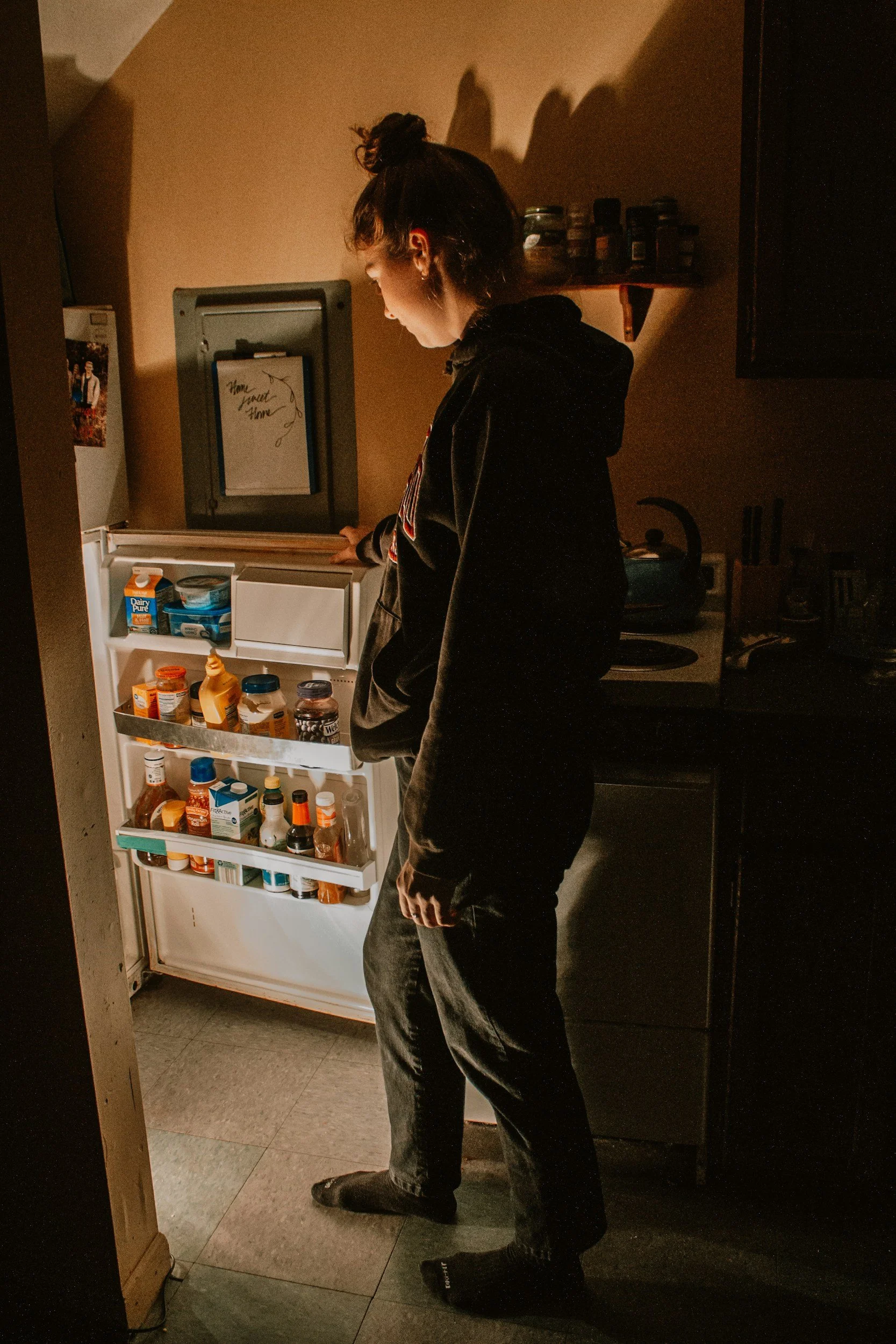
If you’ve ever reached the end of the day and realized you barely ate, only to find yourself eating past fullness or very rapidly once the house gets quiet-you’re not alone. Not even by a long shot. In fact, this experience is often the catalyst for reaching out for therapy for so many of the folks that we see at our practice. The question we often hear during that very first phone call typically sounds something like this:
“Why do I forget to eat all day and then can’t stop eating at night?”
For some, this pattern brings confusion. For others, shame. And for many people, especially those with ADHD, it feels like yet another way their brain is “failing” them.
As eating disorder therapists in Philadelphia (and across Pennsylvania, NJ, Delaware, and more) we want you to know this first:
- This pattern makes sense.
- It’s not a lack of willpower.
- And it’s something deserve support with.
The ADHD–Eating Disorder Overlap That No One Talks About Enough
ADHD doesn’t just affect focus or productivity. It also impacts:
• Interoception (not noticing hunger cues)
• Time blindness (hours pass without realizing it)
• Hyperfocus (forgetting basic needs)
• Executive functioning (planning meals, remembering to eat)
• Impulsivity (especially under stress or deprivation)
When these traits collide with diet culture, perfectionism, or past disordered eating, a familiar cycle often emerges:
Unintentional restriction during the day → intense hunger at night → eating past fullness → guilt → repeat.
Many people don’t recognize this as disordered eating because it wasn’t intentional. But intent doesn’t determine impact. And disordered eating is often much more nuanced than simple “I am trying my hardest not to eat.”
“I’m Not Restricting, I’m Just Forgetting to Eat”
This is one of the most common things we hear from the ADHDers that we work with. And it’s true! You may not be trying to restrict. BUT (you know there had to be a but, right?) when your body doesn’t get enough fuel during the day, it responds exactly as it’s designed to-by increasing hunger signals later.
Nighttime eating often feels urgent, chaotic, or “out of control” not because something is wrong with you, but because your body is catching up.
This can feel especially distressing if you:
• Have a history of an eating disorder
• Grew up around food rules or dieting
• Are a mother who spends the day caring for everyone else
• Were diagnosed with ADHD later in life
Why Nighttime Eating Feels So Intense
By the time evening arrives, several things are usually happening at once:
• Your body is biologically hungry
• Your brain is tired and overstimulated
• Structure and distractions fall away
• You finally have access to food (and yourself)
• You often have more privacy than during the day
For ADHDers, evenings are often when impulse control is lowest and hunger is loudest, which is a perfect storm that can lead to eating far beyond comfort.
This isn’t a personal failure. It’s a predictable response to unmet needs.

So- Is This an Eating Disorder or ADHD?
This is such a common question, and the answer is often: both. Or neither. Or just one. (It’s complicated, sorry! We know that’s an annoying response)
Some people meet criteria for an eating disorder like binge eating disorder or anorexia. Others don’t, but still have a painful, exhausting relationship with food.
What matters most isn’t the label. It’s whether:
• Food feels stressful or chaotic
• Eating feels disconnected from your body
• Shame shows up around hunger or fullness
• You feel stuck in a cycle you can’t seem to break
If that resonates, support can help-especially from therapists who understand both ADHD and eating disorders.
Why Women Are Especially Vulnerable to This Cycle
We want to take a moment to note how vulnerable women and femme folks are to this specific struggle. Women with ADHD are:
• Often diagnosed later in life
• More likely to internalize struggles as personal flaws
• Frequently juggling caregiving, work, and emotional labor
• Socialized to ignore their own needs
Add diet culture into the mix, and many women learn to distrust hunger entirely, making it even harder to notice when their body is asking for fuel.
How Therapy Can Help
Working with an eating disorder therapist who understands ADHD isn’t about forcing meal plans or “fixing” your brain.
At Wildflower Therapy, we focus on:
• Rebuilding trust with hunger cues (even when they’re inconsistent)
• Reducing shame around nighttime eating
• Creating ADHD-friendly nourishment strategies
• Supporting women and mothers with compassion, not control
• Untangling disordered eating from neurodivergence
You don’t need to hit rock bottom to deserve support. You don’t need to be underweight. And you don’t need to have this all figured out before reaching out.
You’re Not Broken! Your Body Is Responding
If you’ve been wondering why feeding yourself feels so hard, especially with ADHD, please know first and foremost that there is nothing wrong with your willpower, your character, or anything else you might have found yourself bullying yourself over. Your body has simply been doing its best to keep you going.
And with the right support, it doesn’t have to feel this hard forever.

Looking for Eating Disorder Therapy in Philadelphia or Pennsylvania?
If this post resonated, our therapists at Wildflower Therapy support children, teens, adults, and families across Pennsylvania who are navigating things like eating disorders, disordered eating, ADHD, body image concerns, anxiety, depression, and maternal mental health/infertility.
We provide therapy in Philadelphia (and virtually throughout Pennsylvania, New Jersey, Delaware, Florida, South Carolina, Vermont, Virginia, Ohio, and Massechusetts.) We work with children, adolescents, and adults.
If you’re looking for an eating disorder therapist in Philadelphia or Pennsylvania, we’d be honored to walk alongside you. Please reach out today to book your free consultation call.