

Anorexia Therapy in Philadelphia and Across Pennsylvania
Specialist anorexia treatment for children, teens, and adults, in every body size. In person in Philadelphia and Devon, virtual throughout Pennsylvania.
Doctoral-level clinicians, every one of whom has worked in higher levels of eating disorder care. Weight-inclusive. You do not have to look a certain way to belong here.
Anorexia is often described as though it announces itself loudly and obviously. But the truth is, in practice, it rarely does.
It can look like discipline. Or sometimes like being very invested in health. Or simple like someone who really has their act together-and who is praised for it. It can go on for years while everyone around a person tells them how good they look.
And before you read any further- if you are wondering whether what you are experiencing is serious enough to warrant help, that question is itself worth bringing to someone. You do not need to have lost anything, proved anything, or reached any particular point to deserve treatment.

What Is Anorexia?
Anorexia nervosa is an eating disorder characterized primarily by restriction of food intake, alongside intense fear related to eating, weight, or body shape, and a disturbance in how a person experiences their own body. Importantly, bingeing and compensatory behaviours can also be part of the diagnosis.
What it is not is a lifestyle choice, a phase, or a matter of willpower. Anorexia is a serious psychiatric illness with real medical consequences, and it is also highly treatable, particularly when treatment starts early and continues long enough.
Recovery is possible at any stage, including after years of illness and including after previous attempts that did not hold.
Anorexia Does Not Have a Body Type
The single most persistent myth about anorexia is that you can identify it by looking.
Atypical anorexia
Someone who meets every criterion for anorexia except that their weight is not considered “low enough". But a very important thing to know about atypical anorexia is that it is, frankly, a terrible name. Because all the best research tells us that the restriction is the same. The psychological symptoms are the same. The medical risk is the same.
Frequently missed
The only difference between this and the standard anorexia diagnosis is a body that has not changed in the way people expect, which means they are frequently missed by doctors, dismissed by family, told they look well, and left without treatment for years.
Larger bodies
People in larger bodies with anorexia are among the most under-diagnosed and under-treated groups in eating disorder care. Some are actively praised for the very behaviours making them unwell. (Often, these are the people that lost weight via their eating disorder behaviors, but since they started in this larger body size, they have been praised for it instead of being offered help. )
Wildflower Therapy is a weight-inclusive, Health at Every Size informed practice. That means we assess what is happening in your relationship with food, your body, and your life, rather than what your body looks like. If you have ever been turned away, doubted, or told you were not unwell enough, you are welcome here.
If You Are Not Sure You Want to Recover
Ambivalence is not a barrier to starting. It is one of the most common features of this illness, and it is something we work with rather than something you need to resolve before reaching out.
Many people arrive wanting to feel better without wanting to change anything, or wanting recovery on Tuesday and not on Wednesday. Some arrive because someone else is worried and they are not sure they agree. All of that is allowed.
If you have been labelled “treatment resistant” or “difficult” by previous providers, that history is welcome here too. Our clinicians have worked at every level of care and are comfortable with the parts of this illness that other outpatient practices may find difficult.
Anorexia, OCD, and Rigidity
Anorexia and obsessive-compulsive patterns overlap substantially, and for many people the two are so tangled that treating one without the other simply does not work.
This can look like rules that cannot be broken. Or sometimes it looks like rituals around eating that create real distress if interrupted. People may find themselves counting, checking, or feeling preoccupied with order and symmetry. Sometimes people exeprience perfectionism that extends well beyond food into work, school, and relationships. They may have intrusive thoughts that feel impossible to argue with.
Several of our clinicians hold formal training in OCD, including exposure and response prevention. Why does this matter? Because the rigidity and rituals that tend to come alongside of anorexia often respond to the same approaches, and because a clinician who recognizes obsessive-compulsive patterns will not mistake them for stubbornness.
We treat the whole picture rather than referring you between two specialists who each see half of it.
Anorexia and Neurodivergence
Anorexia co-occurs with autism and ADHD more often than most treatment settings account for, and the standard approaches do not always fit.
Sensory experiences of food, interoception and the difficulty of reading hunger and fullness signals, a genuine need for routine and predictability, and the exhaustion of masking all shape how restriction develops and how recovery has to work.
The long and short of it? Our care is always neurodivergent-affirming. You do not need to request that we work this way. It will be a standard practice of care. We do not treat a need for structure as pathology to be removed, and we do NOT ask anyone to becoming a different kind of person in order to recover.
Adults With Anorexia
Most anorexia information is written for parents of teenagers, which leaves adults with very little that speaks to them.
Adults with anorexia are managing jobs, relationships, and often children, alongside an illness that may have been present for decades. Some were treated as adolescents and relapsed. Some were never treated at all. Some have functioned successfully for years and reached a point where it stopped working.
We treat adults (young adults, middle aged, and senior adults) as a core part of our practice, including people with long-standing illness. We are honored to tailor therapy for adults with eating disorders in order to ensure that people feel seen in this season. (In other words, it will never feel like therapy that was created for a teenager)
Children and Teenagers
For children and younger adolescents, we can offer Family-Based Treatment, an approach with strong evidence in which parents take an active, supported role in their child's recovery rather than waiting on the sidelines. (We offer this after a careful evaluation to ensure that your child would would benefit from this approach.)
We also support parents in their own right. Watching your child struggle with this is its own trying experience. You deserve care rather than only instructions.
We work with children from age five upward, and we coordinate closely with pediatricians and dietitians throughout.
Stepping down from a treatment program?
If you or your child are leaving residential, partial hospitalization, or intensive outpatient care, the transition is one of the most vulnerable points in recovery, and finding outpatient support that can hold that intensity matters enormously.
This is core to what we do. Every clinician on our team has worked inside higher levels of care, so we speak the same clinical language as your treatment team, we collaborate closely with dietitians, physicians, and psychiatrists, and we are more comfortable supporting clients in earlier stages of recovery than many outpatient practices tend to be
If you are still in a program and planning your next step, we are glad to coordinate with your team before discharge.
How We Treat Anorexia
Treatment begins with understanding your particular presentation, history, and what has and has not worked before.
Your clinician may draw on cognitive behavioral approaches adapted for eating disorders, Family-Based Treatment for children and adolescents, exposure-based work where anxiety and ritual are driving the restriction, body image work, and trauma-focused approaches where earlier experiences are part of the picture.
We work as part of a team. Anorexia is not treated well in isolation, and we coordinate with physicians, dietitians, and psychiatrists so that your medical care and your therapy are connected.
Why Families Choose Wildflower
-

Every clinician has worked in higher levels of care
That experience shapes what we are able to hold.
-

Weight-inclusive
We treat anorexia in every body size, including atypical anorexia.
-

Doctoral-level training
Our founder is a licensed clinical psychologist and published author, and several clinicians hold doctoral degrees.
-

Neurodivergent-affirming
Which changes how recovery is approached.
-

OCD-trained clinicians
For the substantial group whose anorexia is entangled with obsessive-compulsive patterns.
-

All ages
From five through adulthood.
Where we see you
In person in Philadelphia and on the Main Line,
virtual across Pennsylvania
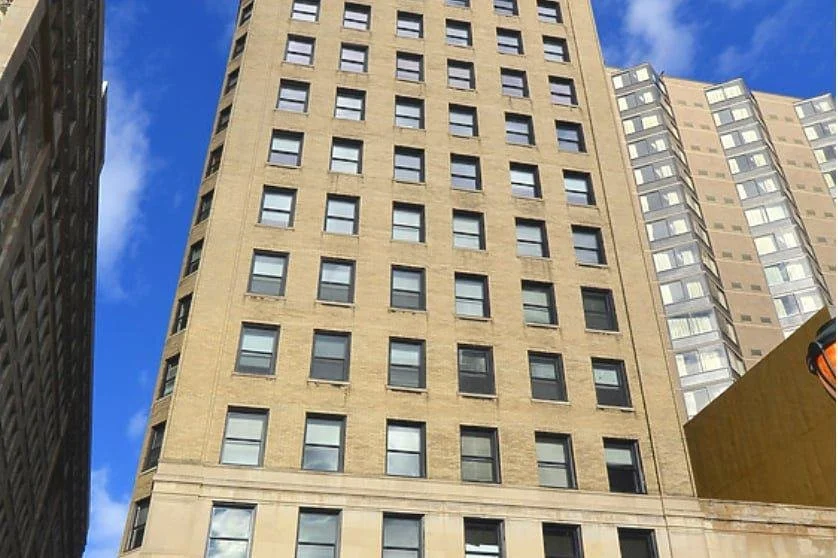
Philadelphia
1315 Walnut Street, Suite 802
Our Philadelphia office is in Center City at 1315 Walnut Street, in the heart of the Gayborhood, easy to reach from anywhere in the city.
Devon, Main Line
237 Lancaster Avenue, Suite 253
Our Devon office serves families across the Main Line, including Wayne, Villanova, Ardmore, Bryn Mawr, Haverford, Radnor, Berwyn, and the surrounding towns.

Do you offer virtual Anorexia therapy in Pennsylvania?
Yes, across the entire state. We are additionally licensed in NJ, DE, FL, MA, VA, SC, OH, and VT, including students living in any of these states even if their parents live elsewhere.
In their words
What colleagues and clients say
-
![""]()
I’ve had the opportunity to collaborate with this practice professionally and have been consistently impressed by their team. Their therapists are incredibly knowledgeable, compassionate, and impactful in the eating disorder space. I always feel confident working with Colleen and her team. If you're looking for an eating disorder therapist, look no further!
– Hannah Pfohl
-
![""]()
Colleen and her team at Wildflower Therapy are experts in eating disorder therapy and truly understand what it means to be neurodiversity affirming. They are also expert at understanding the nuances that come with providing quality care for folks navigating IVF, infertility, and other reproductive care concerns. They are my go-to recommendation for eating disorder therapists in Center City, Philadelphia- relatable, smart, down to earth, kind. You or your family member will be in good hands!
- Katie Fries
-
![""]()
As a Registered Dietitian working in the field of eating disorders, I work with (and refer to!) therapists every day. The entire team at Wildflower Therapy is such a warm, inviting, and talented group of individuals. I love sharing clients with the folks there because I know they are in the best hands possible. Wildflower Therapy is a special place that offers nonjudgmental, human-centered care like no other. If you are a clinician looking to refer (and make great friends in the process) or a client looking for a safe space to share your experiences, look no further!
- Emily Craft
-
![""]()
The team at Wildflower Therapy is incredible! They are so talented, compassionate and true experts in the field of eating disorders and body image. As a therapist myself I have shared clients with them and know first hand how helpful they are. I would absolutely not hesitate to send my own family here.
- Allyson Ford
-
![""]()
Colleen and her team are truly remarkable. Their compassion, competence, and caring when working with therapy clients is unmatched. Highly recommend!
- Nicole McNelis





Our clinicians
Meet Our Anorexia Therapists
Our clinicians bring doctoral-level training, experience inside higher levels of eating disorder care, and genuine warmth. Get to know each therapist, their specializations, and their credentials on our team page.
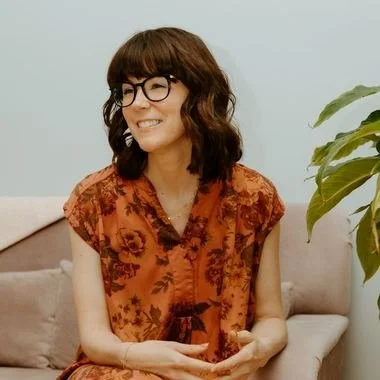
Dr. Colleen Reichmann
Psychologist, Founder
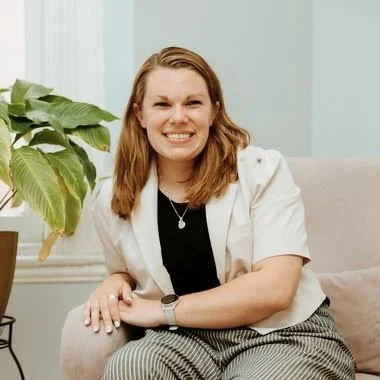
Samantha Palmer
LPC
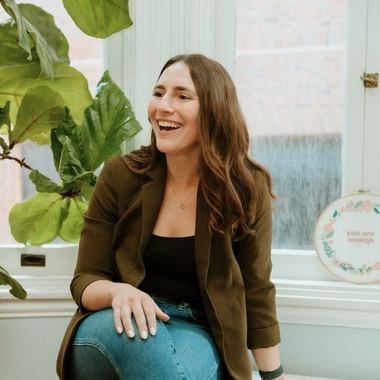
Dr. Ilana Levin
Psychologist, Supervisor
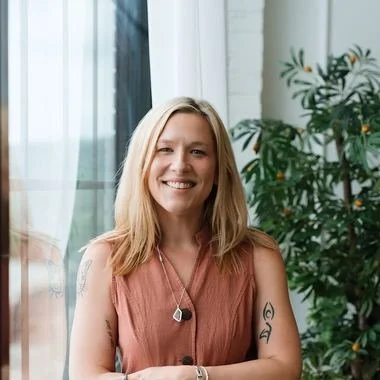
Zia Klein
LCSW
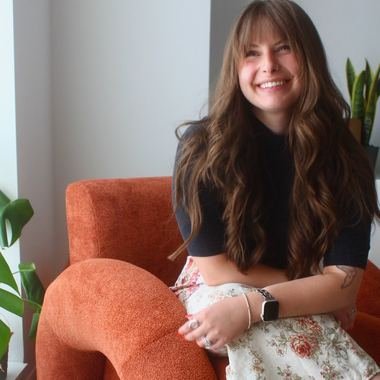
Dr. Yvette Karvay
Postdoctoral Fellow
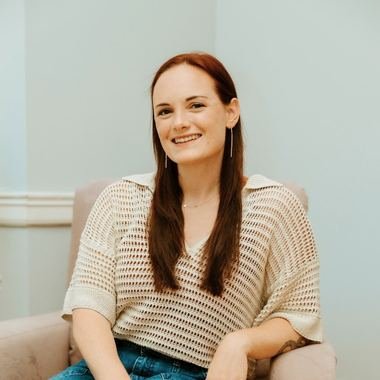
Casey Harvey
LCSW
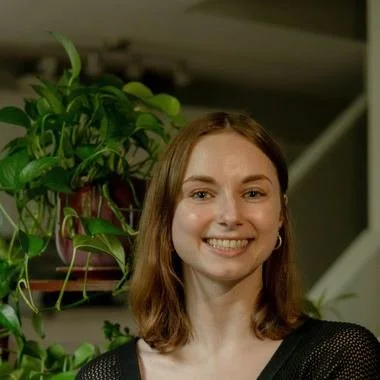
Dr. Brooke Schleyer
Postdoctoral Fellow

Erika Zaslow
LPC
Investment and Insurance
We are a private-pay practice, which lets us keep caseloads small and tailor treatment to each client. We provide superbills for out-of-network reimbursement, and many families receive partial reimbursement from their plans. We will explain exactly how this works on your consultation call.
Three steps
Getting started is simple
Step one
Reach out
Contact us through our contact page or call (215) 668-9356 to schedule a free 30-minute consultation.
Step two
We match you
We match you with the clinician whose eating disorder experience best fits your situation.
Step three
Begin
In Philadelphia, in Devon, or virtually from anywhere in Pennsylvania.
-
Anorexia nervosa is an eating disorder involving restriction of food intake, intense fear related to eating or body shape, and a disturbed experience of one's own body. It is a serious psychiatric illness and it is treatable.
-
Yes. Atypical anorexia involves the same restriction, fear, and medical risk, in a body that has not changed in the way people expect. It is widely under-diagnosed, and we treat it.
-
No. If your relationship with food or your body is causing distress or taking over your life, that is reason enough to reach out.
-
Ambivalence is extremely common and is something we work with rather than something you need to resolve first. You can start from exactly where you are.
-
Frequently. Rigid rules, rituals, and perfectionism are common in anorexia, and several of our clinicians hold formal OCD and exposure and response prevention training.
-
Both. We work with children from age five, adolescents, college students, and adults, including people who have lived with anorexia for many years.
-
An evidence-based approach for children and adolescents in which parents take an active, supported role in their child's recovery. We offer FBT and support parents alongside it.
-
Yes, and we prefer to. We coordinate with physicians, dietitians, psychiatrists, and treatment programmes, including supporting families stepping down from higher levels of care.
-
We are a private-pay practice and provide superbills for out-of-network reimbursement. We will explain how it works on your free consultation.
Questions people ask us
Frequently asked questions



Start your journey here
Wildflower Therapy
1315 Walnut Street, Suite 802, Philadelphia, PA 19107
237 Lancaster Ave, Suite 253, Devon, PA 19333
(215) 668-9356
Free 30-minute consultation · Philadelphia, Devon, or virtual across PA