
Binge Eating Disorder Treatment in Philadelphia and Across Pennsylvania
Specialist, weight-inclusive therapy for binge eating. In person in Philadelphia and Devon, and virtually throughout Pennsylvania.
Doctoral-level clinicians. Health at Every Size informed. We will never put you on a diet.

If you are here, you have probably already tried to fix this on your own. Willpower. Rules. Starting again on Monday. Getting the trigger foods out of the house. Promising yourself that this time will be different.
And then it happens again, and the shame arrives, and the whole thing starts over.
Binge eating disorder is not a willpower problem, and it never was. It is a recognized eating disorder, it is the most common one there is, and it responds well to the right kind of treatment. The reason the strategies you have tried have not worked is not that you did not try hard enough. It is that most of them are the very thing keeping the cycle going.

What Is Binge Eating Disorder?
Binge eating disorder, often shortened to BED, is an eating disorder characterized by recurring episodes of eating that feel out of control, followed by significant distress, shame, or guilt.
The defining feature is not the amount of food. It is the loss of control, and the suffering that follows.
Binge eating disorder is the most common eating disorder, more common than anorexia and bulimia combined. It affects people of every gender, age, body size, and background. And it is one of the most under-diagnosed, largely because so many people experiencing it assume they simply lack discipline and never mention it to anyone.
How is it different from emotional eating?
Most people eat for comfort sometimes. It’s a normal part of being human! Binge eating disorder involves a genuine loss of control, happens with some regularity, and carries real distress with it. If eating occupies far more of your mental space than you want it to, that is worth taking seriously regardless of what label fits.
What It Can Look Like
You might recognize some of this:
Eating past the point of comfort and feeling unable to stop partway
Eating in secret, or planning around being alone
Feeling numb or absent during, and flooded with shame afterward
Hiding evidence, or eating differently in front of other people
A constant loop of restriction, then bingeing, then vowing to restrict harder
Food taking up far more headspace than you want it to
Avoiding social events, dating, travel, or medical appointments because of how you feel about your body or your eating
You do not have to be experiencing all of this. Many of our clients arrive saying some version of "I'm not sure this counts."
Why restriction makes bingeing worse
This is the part almost nobody explains, and understanding it changes everything.
Restriction and bingeing are not opposites. They are two halves of the same cycle, and each one feeds the other.
When the body is under-fueled, whether through skipping meals, cutting out food groups, following rules about what is allowed, or simply eating less than it needs, it responds exactly as it is designed to. Preoccupation with food increases. Fullness signals become unreliable. And eventually the drive to eat overwhelms whatever willpower is holding the line.
That is not a character failure. That is biology doing its job.
Which is why every diet you have started, every clean-eating reset, every attempt to be stricter with yourself, has most likely made the bingeing worse rather than better. You were treating the symptom with the cause.
Effective treatment for binge eating disorder works in the opposite direction. Not more control, but less. Not stricter rules, but the dismantling of them.
What almost no one addresses
Binge Eating, ADHD, and Neurodivergence
If you have ADHD, or suspect you might, binge eating may be tangled up with it in ways that have nothing to do with willpower.
Difficulty registering hunger until it becomes urgent, forgetting to eat during a hyperfocused day and then feeling out of control by evening, the dopamine relief that food can provide, and the way stimulant medication can flatten appetite during the day and leave a rebound at night. All of these are common and all of them are figure-outable.
Our care is neurodivergent-affirming. That means we work with how your brain and body actually function rather than asking you to override them, and we address the underlying patterns rather than layering more rules on top.
We also see how binge eating intersects with anxiety, OCD, trauma, and autism, and we treat the whole picture rather than the eating in isolation.
Binge Eating in Children and Teens
Almost all information about binge eating disorder is written for adults, which leaves parents with very little to go on.
Binge eating does occur in children and adolescents, and early intervention makes a real difference. If your child is eating in secret, hiding food, showing distress around eating, or if you have noticed a shift you cannot quite name, it IS worth a conversation.
We work with children from age five upward, and we offer support for parents alongside treatment for the child. We will never put a child on a diet, and we will never make their body the subject of their treatment.
You are welcome here.
You belong here.
Weight-Inclusive Treatment, and What That Means Here
Wildflower Therapy is a Health at Every Size informed, weight-inclusive practice. In the context of binge eating, that is not a philosophical position, it is a clinical one.
We will not prescribe weight loss.
Intentional weight loss is one of the most reliable predictors of binge eating, and pursuing it during treatment tends to entrench the cycle.
We will not put you on a meal plan of rules.
We will help you build a pattern of eating that keeps your body adequately fueled, which is the foundation everything else rests on.
We will not make your body the problem.
Your body is not the reason this is happening.
On GLP-1 medications.
Many of our clients arrive taking or considering medications such as semaglutide, and ask us if this is ok. We want to be clear that we are weight-neutral, but we are NOT here to tell you what to do with your medical care. We are happy to work alongside your prescriber, and address the psychology behind your relationship with food, no matter what medication you are taking. We will always strive to help you notice how restriction (whether it comes from a diet or from suppressed appetite) affects the cycle, and support you in staying connected to your body's signals through it all.
How We Treat Binge Eating Disorder
Treatment starts with understanding your particular cycle, because no two look the same.
From there your clinician may draw on cognitive behavioral approaches adapted for eating disorders, interpersonal work where relationships and life transitions are driving the pattern, dialectical behavioral skills for emotional regulation and distress tolerance, body image work, and trauma-focused approaches where earlier experiences are part of the picture.
Alongside the eating itself, treatment usually involves rebuilding trust in your own hunger and fullness signals, unpicking the food rules you have absorbed over years, and addressing the shame that keeps this hidden. The shame is often the heaviest part, and it is frequently the first thing to lift.
We coordinate with HAES-aligned dietitians, physicians, and psychiatrists whenever a team approach would be helpful.


Why People Choose Wildflower
-

Eating disorders are our specialism
Not one item on a long list of services.
-

Doctoral-level training
Our founder is a licensed clinical psychologist and published author, and several clinicians hold doctoral degrees. Every clinician has worked in higher levels of eating disorder care.
-

Weight-inclusive by default
On every page and in every room.
-

Neurodivergent-affirming
Which matters more here than most practices acknowledge.
-

We treat the whole age range
From age five through adulthood.
-

Many of us have been there
Either in our own recovery or alongside a family member who recovered.
Where we see you
In person in Philadelphia and on the Main Line,
virtual across Pennsylvania
Philadelphia
1315 Walnut Street, Suite 802
Our Philadelphia office is in Center City at 1315 Walnut Street, in the heart of the Gayborhood, easy to reach from anywhere in the city.

Devon, Main Line
237 Lancaster Avenue, Suite 253
Our Devon office serves families across the Main Line, including Wayne, Villanova, Ardmore, Bryn Mawr, Haverford, Radnor, Berwyn, and the surrounding towns.

Do you offer virtual binge eating treatment in Pennsylvania?
Yes, across all of Pennsylvania, which many clients prefer for this particular work. Talking about binge eating is hard enough without also having to sit in a waiting room first.
We are additionally licensed in NJ, DE, FL, MA, VA, SC, OH, and VT, including students living in any of these states even if their parents live elsewhere.
In their words
What colleagues and clients say
-
![""]()
I’ve had the opportunity to collaborate with this practice professionally and have been consistently impressed by their team. Their therapists are incredibly knowledgeable, compassionate, and impactful in the eating disorder space. I always feel confident working with Colleen and her team. If you're looking for an eating disorder therapist, look no further!
– Hannah Pfohl
-
![""]()
Colleen and her team at Wildflower Therapy are experts in eating disorder therapy and truly understand what it means to be neurodiversity affirming. They are also expert at understanding the nuances that come with providing quality care for folks navigating IVF, infertility, and other reproductive care concerns. They are my go-to recommendation for eating disorder therapists in Center City, Philadelphia- relatable, smart, down to earth, kind. You or your family member will be in good hands!
- Katie Fries
-
![""]()
As a Registered Dietitian working in the field of eating disorders, I work with (and refer to!) therapists every day. The entire team at Wildflower Therapy is such a warm, inviting, and talented group of individuals. I love sharing clients with the folks there because I know they are in the best hands possible. Wildflower Therapy is a special place that offers nonjudgmental, human-centered care like no other. If you are a clinician looking to refer (and make great friends in the process) or a client looking for a safe space to share your experiences, look no further!
- Emily Craft
-
![""]()
The team at Wildflower Therapy is incredible! They are so talented, compassionate and true experts in the field of eating disorders and body image. As a therapist myself I have shared clients with them and know first hand how helpful they are. I would absolutely not hesitate to send my own family here.
- Allyson Ford
-
![""]()
Colleen and her team are truly remarkable. Their compassion, competence, and caring when working with therapy clients is unmatched. Highly recommend!
- Nicole McNelis





Our clinicians
Meet Our Binge Eating Disorder Therapists
Our clinicians bring doctoral-level training, specialized BED experience, and genuine warmth. Get to know each therapist, their specializations, and their credentials on our team page.

Dr. Colleen Reichmann
Psychologist, Founder

Samantha Palmer
LPC

Dr. Ilana Levin
Psychologist, Supervisor

Zia Klein
LCSW

Dr. Yvette Karvay
Postdoctoral Fellow
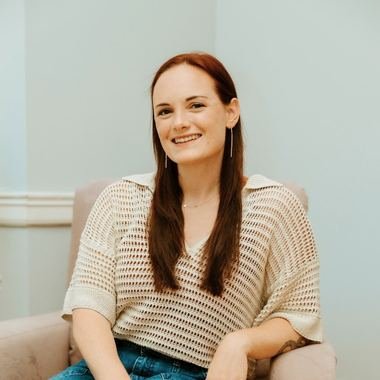
Casey Harvey
LCSW
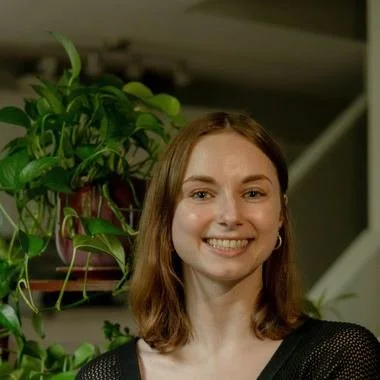
Dr. Brooke Schleyer
Postdoctoral Fellow

Erika Zaslow
LPC
Investment and Insurance
We are a private-pay practice, which lets us keep caseloads small and tailor treatment to you rather than to an insurance company's requirements. We provide superbills for out-of-network reimbursement, and many clients receive partial reimbursement from their plans. We will explain how it works on your consultation call.
Three steps
Getting started is simple
Step one
Reach out
Contact us through our contact page or call (215) 668-9356 to schedule a free 30-minute consultation.
Step two
We match you
We match you with the clinician whose experience fits what you are navigating.
Step three
Begin
In Philadelphia, in Devon, or virtually from anywhere in Pennsylvania.
-
Binge eating disorder is an eating disorder involving recurring episodes of eating that feel out of control, followed by significant distress or shame. It is the most common eating disorder and is highly treatable.
-
No. Many of our clients are unsure whether what they experience "counts." If your relationship with food is causing you distress, that is reason enough to reach out.
-
Not quite. Eating for comfort is a normal human behaviour. Binge eating disorder involves a genuine loss of control, occurs with some regularity, and carries real distress with it.
-
No. We are a weight-inclusive practice. Intentional weight loss tends to worsen binge eating rather than resolve it, so treatment focuses on adequate, flexible eating and on what is driving the cycle.
-
Yes, frequently. Appetite awareness, executive function, medication effects, and dopamine all play a part. Our care is neurodivergent-affirming and we treat the whole picture.
-
Yes. It is far less discussed than in adults, and early support makes a real difference. We work with children from age five upward and support parents alongside them.
-
Yes, across the whole state, alongside in-person sessions in Philadelphia and Devon.
-
We are a private-pay practice and provide superbills for out-of-network reimbursement. We explain how this works on your free consultation.
Questions people ask us
Frequently asked questions


Start your journey here
Wildflower Therapy
1315 Walnut Street, Suite 802, Philadelphia, PA 19107
237 Lancaster Ave, Suite 253, Devon, PA 19333
(215) 668-9356
Free 30-minute consultation · Philadelphia, Devon, or virtual across PA