

Perinatal and Maternal Mental Health Therapists in Philadelphia and Across Pennsylvania
Specialized therapy for the full spectrum of the reproductive experience and matrescence, including infertility, pregnancy loss, pregnancy, postpartum mental health, and parenthood. In person in Philadelphia and Devon, and virtually throughout Pennsylvania.

Doctoral-level clinicians. Founded by Dr. Colleen Reichmann, licensed clinical psychologist and published author. Supporting clients through the full spectrum of matrescence experiences- and especially anyone navigating reproductive mental health alongside food and body image.
At Wildflower Therapy, our therapists are incredibly passionate about maternal mental health. Through personal experience, our founder Dr. Colleen Reichmann recognized the need for more perinatal and postnatal mental health support. She set out to receive extensive training and is now incredibly passionate about helping folks navigate challenges related to infertility, reproductive losses, pregnancy, birth, the postpartum period, and the rest of the wild, ongoing ride that is parenting.

What Is a Perinatal Therapist?
A perinatal therapist is a licensed mental health professional who specializes in the emotional and psychological experiences of the reproductive period: trying to conceive, fertility treatment, pregnancy, birth, loss, and the first years of parenting.
What makes the specialty distinct is context. A general therapist can treat anxiety. A perinatal therapist understands how anxiety behaves when it is tangled with hormonal shifts, medical appointments, sleep deprivation, a changing body, and an identity that is being rewritten in real time.
We support people through:
Trying to conceive
Infertility and secondary infertility
Fertility treatments, including IUI and IVF
Pregnancy after loss, and anxiety during a high-risk pregnancy
Miscarriage, stillbirth, termination for medical reasons, and embryo loss
Birth trauma and difficult or unexpected birth experiences
Postpartum depression, anxiety, rage, OCD, and intrusive thoughts
The identity shift of becoming a parent, sometimes called matrescence
Feeding, body image, and disordered eating across all of the above
You do not need to be in crisis to deserve support. Many of our clients simply feel like they don’t recognize themselves in this new and uniquely challenging chapter, and want somewhere to put that. We are honored to be that somewhere.


Perinatal Mood and Anxiety Disorders
Perinatal mental health refers to mental health during pregnancy and the postpartum period. And let's be real, this time period can be a doozy.
Postpartum Depression and Postpartum Anxiety affect roughly 1 in 7 women. Symptoms can range in severity, but the important facet to understand is that it is not the "baby blues."
What is the difference between baby blues and postpartum depression?
Baby blues are common in the first two weeks after birth and typically pass on their own. Postpartum depression persists beyond that, intensifies rather than fades, and begins to interfere with daily functioning or with bonding.

PPD and PPA
Postpartum Depression (PPD) is typically an agitated depression that can include feelings of immense sadness, anger, irritability, or emptiness.
Postpartum Anxiety (PPA) is an anxiety disorder that can include constant generalized anxiety or specific obsessive thoughts about the safety of one's baby. Both PPD and PPA can interfere significantly with functioning, and can also negatively impact one's ability to feel close and bonded with their new baby.
Postpartum rage
Postpartum rage is one of the least-discussed presentations and one of the most frightening to experience. Anger that arrives fast, feels disproportionate, and leaves shame behind it. It is a recognized part of the postpartum picture, not a character flaw.
Intrusive thoughts and postpartum OCD
Postpartum intrusive thoughts and postpartum OCD involve unwanted, distressing thoughts, often about harm coming to your baby. Having these thoughts does not mean you want them to happen and does not make you a danger to your child. They are common, they are treatable, and naming them out loud with someone who understands them is usually one of the most important steps on the route to relief.
During pregnancy, not only after
Depression and anxiety can also occur during pregnancy. This is called prenatal depression and anxiety, and it can look like frequent crying, mood swings, fatigue, irritability, difficulty concentrating, sleep issues, constant anxiety, appetite changes, scary thoughts, ruminating, and hopelessness.
If you are struggling with mental health during the perinatal period, please know you do NOT have to go it alone.
Infertility and Reproductive Loss
So we've all heard the statistics: one in eight women struggle with infertility, and one in four women have a pregnancy that ends in miscarriage. Research shows that both of these journeys can be incredibly challenging and traumatizing for some. And honestly? Those words do not do this type of pain justice.
Fertility issues and reproductive loss can leave folks feeling depressed, isolated, anxious, and overwhelmed with grief. And this grief tends to be felt in isolation. It's not "tupperware grief," ya know? And yet it's the kind of pain that's felt in quiet, near-constant moments all throughout the day. We, as a society, do not do a great job of validating the grief and agony that can accompany the struggle to conceive, or the loss of a pregnancy.

Secondary infertility deserves its own mention
Struggling to conceive again when you already have a child comes with a particular loneliness, because people assume you are fine and you may feel you have no right to grieve. You do.
If you are struggling with infertility or reproductive loss, we want to help. Whether you are struggling to conceive, going through IUI or IVF, or struggling with grief following embryo loss, pregnancy loss, a stillbirth, a termination for medical reasons, or trying to manage fear and anxiety during a pregnancy after a loss- we are here and ready to support you.
What almost no one addresses
When Food and Body Image Are Part of the Story
This is the piece almost no one addresses, and it is where a great deal of our work happens.
Pregnancy, fertility treatments, perinatal loss, and postpartum all ask enormous things of your body- and they often ask them publicly. Your body changes in ways you cannot control. Appointments involve the scale and commentary you did not ask for. Fertility medications can change how your body feels (and yes, sometimes how it looks). And then after birth? Our culture turns immediately to how quickly you can look like you did before you had a baby.
For anyone who has ever had a complicated relationship with food or their body, this can all bee uniquely destabilizing. For anyone in eating disorder recovery, it can be genuinely distressing in ways that are difficult to put into words.
You might recognize yourself here if:
You thought this was behind you, and it is resurfacing
You want a baby and are frightened of what pregnancy will do to your body
You are feeding a child while quietly struggling to feed yourself
You have had doctors or therapists in the past who understand your body or your mind, but never a provider who understand both at once, and the nuanced interplay of the two.
You are struggling with a profound feeling of betrayal from your body due to infertility or loss.
You have ever felt shame in struggling with the weight and appearance aspect of your fertility journey, because you are “supposed” to care more about your baby than these things.
Can I get therapy for an eating disorder and perinatal mental health at the same time?
Yes. Wildflower Therapy is first and foremost an eating disorder therapy and body image counseling practice, and our perinatal clinicians bring that expertise into the room with them. That means you will not have to explain one half of your experience to someone who only understands the other half.
We work from a Health at Every Size and weight-inclusive lens. We coordinate with HAES-aligned dietitians and with your medical team. And we will never treat your body as the problem to be solved.
Maternal Mental Health and Early Motherhood
Let's be real here, early motherhood is a Wild. Freaking. Ride. One that can be full of beauty, yes. But one that can also be full of despair, sadness, disappointment, anger, and a whole host of other tough emotions. From birth trauma, to sleep deprivation, to returning to outside work, to mom guilt, to breast and chestfeeding, to bottle-feeding, to navigating unexpected twists and turns in your motherhood journey, at Wildflower Therapy we are here to support you.
It can be especially helpful to see a therapist because therapy is a space where you can put words to all of the thoughts that might feel scary or "unspeakable" in the presence of others. We can help hold space for all of the harder thoughts and emotions you are experiencing in this phase of life. We can also provide you with skills and support to navigate the various struggles that are unique to motherhood.

A Special Note for Moms of Neurodivergent Kids
Your motherhood journey has been unique, and likely so, so lonely in certain ways. Whether your child is diagnosed with autism or ADHD, or your mom-gut has always told you that they are neurodivergent but they have yet to be formally diagnosed, you deserve support (and probably a giant cup of coffee).
Mothering a child who struggles in our neuronormative world involves so much invisible labor. And there is such a lonely aspect to this journey. Maybe you experience sadness at how so many seem unable to grasp just how unique and beautiful their mind is. Maybe you have experienced the pain of a daycare or preschool expulsion. Maybe you have navigated the grinding rollercoaster of evaluations, paperwork, and extra appointments throughout the week. Maybe you feel like you're drowning in IEP meetings, and under the weight of judgement from others who mainly see your child as "defiant."
Whatever your journey, and wherever your child is on the spectrum of neurodivergence, you deserve support from someone who understands this road and this world. We cannot say this strongly enough:
You are welcome here.
You belong here.
How We Work
There is no single approach that fits every person, so we do not offer one. Your therapist will draw on evidence-based methods matched to what you are carrying, always through a weight-inclusive, trauma-informed lens.
Depending on your needs, that may include cognitive and behavioral approaches, work specifically targeting intrusive thoughts and compulsions, grief-focused work for loss, body image work, and support for the relationship strain that fertility treatment and early parenting can create.
We also collaborate. We work alongside your OB, midwife, reproductive endocrinologist, dietitian, and psychiatrist. You should not have to be the messenger between your own providers.
Why People Choose Wildflower
-

Doctoral-level training
Our founder is a licensed clinical psychologist and published author, and several of our clinicians hold doctoral degrees.
-

We hold both halves
Reproductive mental health and disordered eating and body image, with the same therapist, in the same hour. Most practices offer one or the other.
-

Lived experience
Our founder came to this work through her own experience. This is not a service line we added because it was popular.
-

Weight-inclusive by default
Health at Every Size informed, LGBTQIA+ celebratory, and neurodivergent-affirming, on every page and in every room.
Where we see you
In person in Philadelphia and on the Main Line,
virtual across Pennsylvania
Philadelphia
1315 Walnut Street, Suite 802
Our Philadelphia office is in Center City at 1315 Walnut Street, in the heart of the Gayborhood, easy to reach from anywhere in the city.

Devon, Main Line
237 Lancaster Avenue, Suite 253
Our Devon office serves families across the Main Line, including Wayne, Villanova, Ardmore, Bryn Mawr, Haverford, Radnor, Berwyn, and the surrounding towns.

Do you offer virtual perinatal therapy in Pennsylvania?
Yes, across the entire state. Many perinatal clients prefer it, and for good reason: a newborn asleep on your chest, no childcare to arrange, no drive with a car seat. Sessions from your couch can be the most effective route for this season.
We are additionally licensed in NJ, DE, FL, MA, VA, SC, OH, and VT, as well as students living in any of these states, even if your parents live elsewhere.
In their words
What colleagues and clients say
-
![""]()
I’ve had the opportunity to collaborate with this practice professionally and have been consistently impressed by their team. Their therapists are incredibly knowledgeable, compassionate, and impactful in the eating disorder space. I always feel confident working with Colleen and her team. If you're looking for an eating disorder therapist, look no further!
– Hannah Pfohl
-
![""]()
Colleen and her team at Wildflower Therapy are experts in eating disorder therapy and truly understand what it means to be neurodiversity affirming. They are also expert at understanding the nuances that come with providing quality care for folks navigating IVF, infertility, and other reproductive care concerns. They are my go-to recommendation for eating disorder therapists in Center City, Philadelphia- relatable, smart, down to earth, kind. You or your family member will be in good hands!
- Katie Fries
-
![""]()
As a Registered Dietitian working in the field of eating disorders, I work with (and refer to!) therapists every day. The entire team at Wildflower Therapy is such a warm, inviting, and talented group of individuals. I love sharing clients with the folks there because I know they are in the best hands possible. Wildflower Therapy is a special place that offers nonjudgmental, human-centered care like no other. If you are a clinician looking to refer (and make great friends in the process) or a client looking for a safe space to share your experiences, look no further!
- Emily Craft
-
![""]()
The team at Wildflower Therapy is incredible! They are so talented, compassionate and true experts in the field of eating disorders and body image. As a therapist myself I have shared clients with them and know first hand how helpful they are. I would absolutely not hesitate to send my own family here.
- Allyson Ford
-
![""]()
Colleen and her team are truly remarkable. Their compassion, competence, and caring when working with therapy clients is unmatched. Highly recommend!
- Nicole McNelis





Our clinicians
Meet Our Perinatal Therapists
Our clinicians bring doctoral-level training, specialized perinatal experience, and genuine warmth. Get to know each therapist, their specializations, and their credentials on our team page.

Dr. Colleen Reichmann
Psychologist, Founder

Samantha Palmer
LPC

Dr. Ilana Levin
Psychologist, Supervisor

Zia Klein
LCSW

Dr. Yvette Karvay
Postdoctoral Fellow
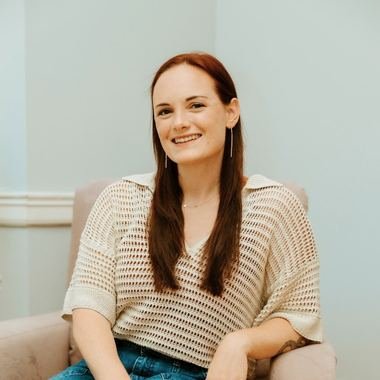
Casey Harvey
LCSW

Dr. Brooke Schleyer
Postdoctoral Fellow

Erika Zaslow
LPC
Investment and Insurance
We are a private-pay practice, which lets us keep caseloads small and tailor treatment to you rather than to an insurance company's requirements. We provide superbills for out-of-network reimbursement, and many of our clients receive partial reimbursement from their plans. We will walk you through exactly how that works on your consultation call.
Three steps
Getting started is simple
Step one
Reach out
Contact us through our contact page or call (215) 668-9356 to schedule a free 30-minute consultation.
Step two
We match you
We will match you with the therapist on our team whose expertise best fits what you are navigating.
Step three
Begin
In person in Philadelphia or Devon, or virtually from anywhere in Pennsylvania.
-
A perinatal therapist specializes in mental health across the reproductive period: trying to conceive, fertility treatment, pregnancy, birth, loss, and postpartum. The specialty exists because these experiences involve physical, hormonal, and identity changes that general therapy often treats as background rather than as the subject.
-
Whenever the struggle is affecting your daily life, your relationships, or your ability to feel connected to yourself or your baby. You do not need a diagnosis and you do not need to be in crisis.
-
Baby blues typically appear in the first two weeks after birth and resolve on their own. Postpartum depression persists longer, tends to intensify, and interferes with functioning or bonding.
-
Yes. Intrusive thoughts are common in the postpartum period and are not a sign that you are dangerous or a bad parent. They respond well to therapy, particularly with a clinician who recognizes them for what they are.
-
Yes, and this is one of our core specialties. Wildflower Therapy is an eating disorder and body image practice with perinatal expertise, so you will not have to choose between the two.
-
Yes. We support clients through trying to conceive, IUI and IVF, secondary infertility, pregnancy loss, termination for medical reasons, and pregnancy after loss.
-
Yes, throughout the state, alongside in-person sessions in Philadelphia and Devon.
-
We are a private-pay practice and provide superbills so you can seek out-of-network reimbursement. We explain exactly how this works on your free consultation.
Questions people ask us
Frequently asked questions

Start your journey here
Wildflower Therapy
1315 Walnut Street, Suite 802, Philadelphia, PA 19107
237 Lancaster Ave, Suite 253, Devon, PA 19333
(215) 668-9356
Free 30-minute consultation · Philadelphia, Devon, or virtual across PA