
Written by Dr. Colleen Reichmann, clinical director of Wildflower Therapy, and very tired mother
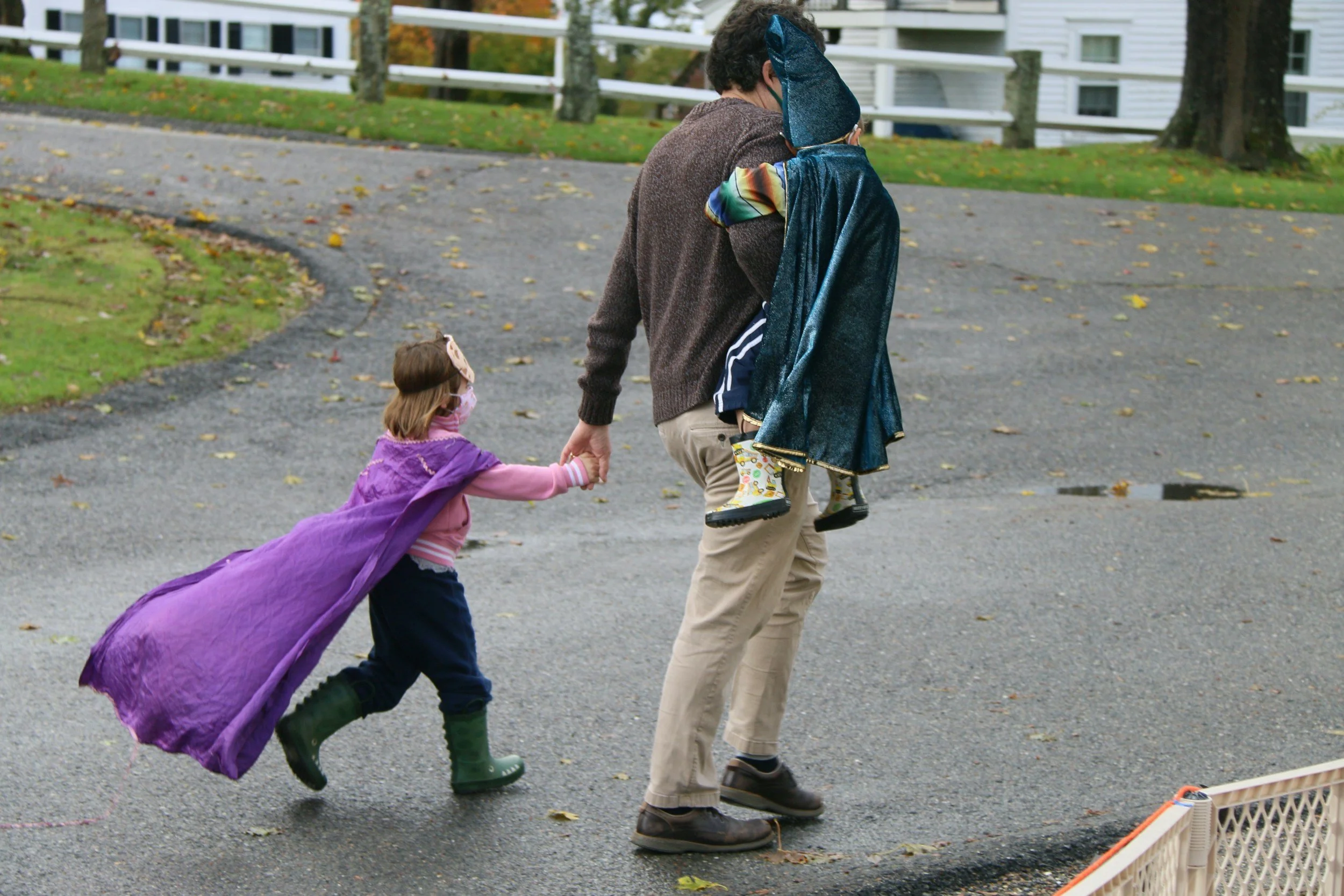
Every October, it’s the same thing (at least if you are in a similar algorithm to mine)- the internet turns into a courtroom, and Halloween candy is, once again, on trial.
One side says children should be allowed to eat as much candy as they want. Another warns about sugar, hyperactivity, diabetes, the importance of setting limits, (insert a multitude of other concerns about very unnerving consequences...)
Somewhere in the midst of the fear mongering, a mother is standing in her kitchen, looking at a plastic pumpkin candy bowl, overflowing with miniature Reese’s cups, wondering whether letting her seven-year-old eat another one is going to ruin their relationship with food. If you have found yourself in this position, welcome. You are in very good company.
Can we just name something together? This debate has become exhausting. Parenting already comes with an extraordinary amount of advice about what we should be doing. And lucky us, now that we are parenting in the age of social media, we ingest advice, hot takes, and very extreme opinions all day long! *cries in millennial mother*
I can think of few other parenting arenas that garner the same level of emotional intensity than the feeding one. What should we feed our children? How much they should eat? Are we offering enough variety? Are we going to give them an eating disorder? Are we making food fun enough? Scratch that, are we being “too fun” and will that mean that we are going to cause diabetes?
Now enter Halloween. And suddenly, even this holiday built around costumes, neighborhood walks, and tiny bags of candy can feel like a test we are somehow supposed to pass.
As a psychologist who specializes in eating disorders and body image, I admittedly spend a lot of time thinking about the messages children receive about food. I also think a lot about the parents trying to navigate these questions with care, especially when they are carrying their own complicated histories with food and their bodies.
My answer to the Halloween candy question is that most of us would benefit from approaching it with a good deal less panic than the internet might suggest.
So if you are part of the exhausted parents club, please read on for what I hope will be a breath of fresh are-and some helpful principles that can make Halloween feel a little less fraught.
Should I Limit My Child’s Halloween Candy?
This is the question underneath much of the October discourse, right? And honestly, my answer as a person who has been in the eating disorders field for over a decade (and has worked with all variety of children, from those diagnosed with ARFID, to those who are brought into my office for sneak-eating sweets) is- for most children, I would encourage parents to consider simply letting them eat the candy they want on Halloween night, including when they get home from trick-or-treating.
Yup, even if it is more than you expected. Yes, even if they eat many pieces in a row. And yes, even if a small voice in your head starts wondering whether you should intervene before things get out of hand.
Because that voice might be drawing on years of messages about sugar, health, and self-control. It might be remembering how you were raised around food. And, if nothing else, it might very well be responding to the genuinely overwhelming (and often times click-baity, fear-monger-y) amount of advice parents receive about feeding children.
I feel like the best thing parents can do is let their kids have the candy (which WILL involve “going overboard” in most parents eyes, in the case of most children, to be clear.) And work on addressing their lens about that experience. (This means calling out what has caused us to feel like watching them have a lot of candy is essentially the same as being chased by a bear.)
Children are often excited about Halloween candy because it is exciting. They have spent the evening collecting something delicious and comparing their loot with friends. Halloween is a holiday in which candy has always played a starring role…so yeah. They might eat more than usual- because it is available, because it tastes good, and because the whole experience is fun.
When adults respond to this excitement with repeated warnings, strict limits, or anxious commentary, candy can start to feel like a much bigger deal than it needs to be. Children are smart. They pick up on our anxiety even when we couch it in terms about being kind to our bodies, or use seemingly fun ideas like the switch witch instead of outright telling them they aren’t allowed to have their candy. So they may begin to wonder why adults are so concerned about something that is supposed to be enjoyable.
Allowing your child to enjoy their candy without a lot of intervention can offer a different experience. They get to eat something they like without feeling judged, or reminded that the food is something they should be careful about- in essence, they get to enjoy the star player of the holiday.
And please know, this does not mean every child will intuitively stop eating when they are full, or that every child will respond to unlimited candy in the same way. Children are still learning about hunger, fullness, and how to navigate an abundance of exciting foods. Some will eat a lot. Some (this will be the minority, in my humble opinion) will eat a few pieces and forget about the rest. Some will eat many pieces along the trick or treating route, spend twenty minutes sorting their candy by color when they get home, and then decide they are more interested in playing than having more.
There is room for all of these responses. And if your kid is one that seems very interested in having A LOT of their candy at once, please know it’s not because you are “doing it wrong.”
For most children, an evening of eating lots of candy is not something that needs to be corrected or compensated for. You can let Halloween be Halloween.
What If My Child Eats Candy All Night After Trick-or-Treating?
Imagine that your child gets home from trick-or-treating, dumps their candy on the living room floor, and immediately starts eating. They eat a few pieces while sorting their favorites. Then they eat a few more. They ask whether they can have another chocolate bar, and then another.
There it is. That gnawing anxiety starts. You feel an urge to establish a limit immediately. After all, you were planning to allow three pieces, and they have already eaten six. And they barely ate dinner because they were so excited. And that one doctor from tiktok said that giving them candy is basically giving them poison…
Take a breath.
If your child is otherwise healthy and there are no individual allergies or medical concerns that require a different approach, consider allowing them to enjoy their candy, and trust that it doesn’t have to be correlated with all of the terrifying consequences that the parenting arena has suggested it will.
And hey- you can still offer dinner before trick or treating or after! You can still follow your usual bedtime routine. You can still implement other boundaries like taking a bath before bed, brushing teeth, etc. You can do all of this without also treating the candy itself as an emergency, or getting rigid with it.
If your child eats more than you expected or are comfortable with? You can let that be part of the experience, too. I think of this discomfort as mainly data for ourselves- information about how intense our own anxiety and potentially catastrophic thinking about candy is.
We sometimes underestimate how much adult attention can amplify the significance of a food. If candy is usually tightly controlled, a child may be particularly excited when access suddenly increases. That excitement may settle as candy becomes less of a forbidden or scarce commodity, (although every child's experience will be different- some may continue to love candy and look forward to it. That is ok and very normal as well. In my experience the candy-enthusiast children who are truly too obsessed with candy in a way that is worrisome or requires intervention are far more the exception than the rule.
(And remember- you do not need to determine what their behavior means based on one evening.)
What About the Next Day? Should I Let My Child Eat as Much Candy as They Want Then, Too?
This is where I would encourage parents to extend the experiment.
If you are comfortable doing so, consider leaving the bag out, and just allowing your child to eat all of the candy they want the following day, too. And please know, you might feel more anxious about this than you did on Halloween night. The novelty has worn off a little, and you may be thinking about all the candy still sitting in your house. You might worry that if you do not impose limits now, your child will spend the next several weeks eating nothing but chocolate and gummy worms.
But I truly do believe that giving your child another day of that relatively unrestricted access can help communicate that candy is available and enjoyable, rather than this rare opportunity that must be seized before the adults take it away.
And remember, for some children, that may mean eating quite a bit of candy. For others, interest may fade more quickly. There is no guaranteed timeline, and the point is to give candy a chance to become less extraordinary, while still understanding that it will likely always taste good and feel fun for kids (similar to how it still tastes good and feels fun for most of us as adults)
When children are accustomed to having sweets heavily restricted, they may feel a sense of urgency when those foods become available. So allowing more freedom can help kids experience candy without the same pressure to eat it immediately or in large quantities before the opportunity disappears.
This is one reason I often encourage parents to think about the overall food environment in their home, rather than focusing so intensely on a particular food or eating occasion. Because if halloween candy is available only for a short window before it disappears, it makes sense that children might feel motivated to get as much as they can. If candy can be enjoyed again tomorrow, and the next day, the urgency may begin to ease.
How Do I Transition Back to Normal Routines Without Making Candy Forbidden Again?
After a day or two, you might be ready to put some structure around the remaining candy. This is where I think parents have the opportunity to lean into a less anxious relationship with the fears around what candy means for their kids (Because there are enough things to stress about when it comes to raising kids! The stress around sugar and candy is much worse for all of us than the candy itself) The goal, at least in my opinion, is to sort of just let the candy become less of a big deal-which means gradually folding it into ordinary family life.
If you want a little more structure, you might tell your child that the rest of their candy will live in in particular cupboard or container, instead of on the counter. Let them know where it is going. They do not need to feel that you are secretly confiscating it or that it has disappeared because they ate too much.
You could say something like, "We're going to put the rest of your Halloween candy in this cupboard. I’ll make sure to add it to your lunches and you can have it with your snacks when you feel like it!”
Then make the candy available in predictable, ordinary ways. Add it to their lunches and as part of their afternoon snacks. Let them access it after dinner if they want.
The specifics will depend on your family, your child's age, and their individual needs. The important part is that the transition does not have to involve a dramatic announcement about sugar, a discussion about “grow foods”, or any specifics rules that make candy off-limits.
What If My Child Is a “Picky Eater” or Has ARFID?
If you are parenting a selective eater, Halloween may bring up a different set of concerns.
Perhaps your child eats only a small number of familiar foods. Maybe they have strong sensory preferences around texture, smell, or taste. You might already spend much of your day worrying about whether they are getting enough nutrition, and the thought of them filling up on candy feels overwhelming.
For parents of children with avoidant/restrictive food intake disorder, or ARFID, food can be complicated long before Halloween arrives.
ARFID can involve significant food avoidance related to sensory sensitivities, low interest in eating, or fears about unpleasant consequences such as choking or vomiting. For some children, the effects extend to nutritional deficiencies, difficulties with growth, or substantial disruption to family and social life.
If this sounds familiar, I want you to know that your concerns deserve to be taken seriously. You are not imagining how stressful feeding difficulties can be. And, at the same time, Halloween does not need to become another opportunity to put pressure on yourself to solve your child’s food struggle.
If your selective eater has some types of candies they genuinely enjoy, I suggest letting them enjoy those foods (probably no surprise there!) If they are excited about candy, you can make room for that excitement. If they are uninterested in most of their treats, you do not need to persuade them to eat more simply because it is Halloween.
For children with ARFID, the priority is ensuring they have access to adequate nutrition and receiving appropriate support for their individual feeding needs. If your child is already struggling to meet their nutritional needs, candy that they actually like will likely just need to be an add on to the safe foods that they are already relying on.
And, Halloween aside, please know that if your child's selective eating is affecting their growth, nutrition, or ability to participate in everyday activities, an ARFID-specialized eating disorder-informed clinician can help you determine what support is appropriate, and make cope ahead plans for occasions like Halloween to reduce your overall anxiety.
For families looking for ARFID therapy or support for selective eating in Philadelphia and on the Main Line, please us here at Wildflower Therapy in mind! Your child deserves support that meets them where they are, and you deserve a break from feeling as though every food decision is another opportunity to get something wrong. Shame has no place here.
What If My Child Struggles With Binge Eating or Seems Unable to Stop Eating Candy?
Some parents will read this advice and think, but my child really does seem to lose control around food. Am I supposed to let them eat as much as they want, too?
Firstly, eating a lot of candy on Halloween does not, by itself, indicate binge-eating disorder. (I know you likely know this, but it’s worth repeating because the anxiety about binge eating can feel so haunting and consuming for a lot of parents). A child can eat an unusually large amount of food during a special occasion without having any sort of eating disorder.
What is worth paying closer attention to is when a child regularly experiences a sense of losing control while eating, feels significant distress about their eating, or if you notice that they seem to have become caught in a pattern of secrecy or shame around eating (ie what parents will often call “sneak eating.”)
If you are noticing these patterns, I would encourage you to approach your child with curiosity and compassion. Are they getting enough food throughout the day? Are they skipping meals or arriving at dinner extremely hungry? Have certain foods become less of an option, so your child feels they need to eat as much as possible whenever they are available? Are there emotional or social experiences that seem to make eating more difficult?
These questions can help you understand what is happening without assuming that your child simply needs more boundaries. For children who struggle with binge eating or loss-of-control eating, predictable access to adequate food and reduced shame around eating can be important parts of support. AND, please know that if your child seems to have persistent loss-of-control eating or significant emotional distress around food, these conversations with them, and offering more liberal access to candy may not be enough to move the needle in terms of how they are interacting with food. It can often be very helpful to connect with a therapist who specializes in pediatric eating disorders, in order to create a truly individualized plan of support.
The broader message still applies: you do not have to turn food into a moral issue or make your child feel ashamed of their appetite, nor do you have to shame yourself for feeling concerned or anxiety about how to best intervene. If you are worried about binge eating in your child, seeking an assessment can help you understand what is happening and identify an approach that supports both their physical health and their emotional well-being.

Why Are We Making Candy Such a Big Deal, Anyway?
I think this is the question worth sitting with for a moment.
Children grow up surrounded by messages about food. They hear adults talk about being good or bad, eating too much, needing to work off a meal, or trying to resist temptation. They see certain foods celebrated as rewards and others treated as things that automatically mean disease and peril.
Even when we are careful about the language we use with children, our general culture (and of course our own anxiety) can communicate that certain foods are unusually powerful or dangerous. And halloween candy can become a small stage on which all of these intense messages play out.
A child wants a piece of candy. A parent worries about sugar. The child asks for another piece. The parent becomes concerned about self-control. Soon, everyone is focused on how much candy is being eaten, and the original purpose of the holiday has gotten lost.
I wish we could all collectively agree to release the intensity, and the symbol of the candy, and just let children enjoy sweets without turning them into a dangerous test of our character or theirs. We can provide regular meals and snacks, establish family routines, and talk about food without making children feel that their bodies or appetites need to be controlled.
We can also recognize that children are learning. They truly don’t need to demonstrate perfect moderation at every opportunity. They are developing their understanding of food through experience, and adults can help create an environment in which eating feels safe, predictable, and relatively uncomplicated.
That in no way means that every food decision is inconsequential. But it does mean that many of them are much less consequential than we have all come to believe! (And it means we might want to work on keeping those concerns more in proportion to the situation…)
One evening of Halloween candy does not need to carry the weight of your child's entire future relationship with food. And a child who loves candy does not automatically need an intervention.
Sometimes, the most useful thing we can do is touch grass, and remind ourselves that our lens has understandable become distorted. Candy does not have to hold this much power.
A Final Word for the Parent Who Is Tired of Trying to Get Food Parenting Right
If you are exhausted by the great Halloween candy debate, I truly hope you can give yourself permission to step away from it. Let your child enjoy Halloween. Consider allowing them to eat the candy they want that evening and giving them another day or two to enjoy it before gradually establishing a predictable routine for accessing it in an ongoing way. Let them know where the candy is going, and consider including some in their lunches or offering it alongside ordinary snacks.
And of course, please adapt this approach to your child's individual needs, particularly if they have ARFID or a medical condition affecting their eating.
And remember that your child will have years to learn about food, health, appetite, and the many ways eating fits into daily life. You will have countless opportunities to offer guidance, establish routines, and help them navigate difficult feelings. (You will also have nights when dinner is rejected. Or someone eats so much cake that they feel ill. Or a sudden decision that an old standby like pb and j is actually so gross… and you’ll wonder why parenting seems to involve so many ongoing battles and decisions about things you never expected to think about this much.)
There is so much pressure on us already, so much we already worry about. So many decisions that feel life or death when it comes to parenting. If nothing else, I hope to be a small voice to remind you that candy doesn’t really need to be one of them. You can care about your child's health and let them enjoy sweets. And you can let Halloween be messy, ridiculous, over the top, and a lot more fun.
Team let’s-all-work-towards-less-weirdness-about-candy over here. For the sake of parents, as much as for kids. Happy Halloween, and camaraderie to all the parents this weekend. We got this.

Reach out today!
At Wildflower Therapy, our clinicians specialize in eating disorders, body image concerns, maternal mental health, and more. We work with children, adolescents, college students, and adults, with therapy available in person in Philadelphia and Devon, Pennsylvania, as well as virtually for clients in states where we are licensed to provide care.
If you are wondering whether therapy could help you or your child, we offer free consultation calls to talk through what you're seeing and determine what kind of support makes sense. Please reach out today if you would like to talk more about therapy options within our practice!